KROWN-Z CARE GUIDE
How to Wash
Human Hair Wigs
& Toppers
A gentle step-by-step routine for cleansing, conditioning and drying human hair at home.
8–10 min read
Human hair wigs and toppers need gentle handling, but washing them at home does not need to be complicated.
The basic routine is simple: detangle first, wet thoroughly with lukewarm water, cleanse gently with diluted sulphate-free shampoo, condition the lengths, remove excess water without twisting, then reshape and allow the hair to air-dry completely.
These principles apply to most human hair wigs and toppers. Bonded hair systems, adhesive pieces and synthetic hair may require different care, so always follow the instructions supplied with your piece.
THE ROUTINE
The Process at a Glance
- 01Detangle
- 02Wet
- 03Shampoo
- 04Wash
- 05Clean Base
- 06Rinse
- 07Condition
- 08Press Dry
- 09Air-Dry
Before you begin, have a wide-tooth comb, lukewarm water, a gentle sulphate-free shampoo, lightweight conditioner, an absorbent towel and a suitable stand ready.

01
Detangle the Hair and Secure Any Clips
Before the hair touches water, gently remove any tangles.
Start at the ends and gradually work towards the mid-lengths and roots. Support the hair close to the base while brushing or combing to reduce tension on knots, hand-tied areas and delicate construction.
If your wig or topper has clips, close them completely before washing. Open clip teeth can catch the hair or pull against the base.
If your piece has no clips, simply skip this step.
02
Wet the Hair with Lukewarm Water
Place the wig or topper in a clean basin of lukewarm water, or gently wet it under softly running water.
Keep the hair aligned and allow it to become evenly saturated before introducing shampoo.
Use lukewarm water. Water that is too cold may make the hair feel less manageable during washing, while hot water can contribute to dryness and damage.
If using running water, keep the pressure gentle and avoid directing a strong stream onto delicate lace, knots, silk-top areas or hand-tied sections.
03
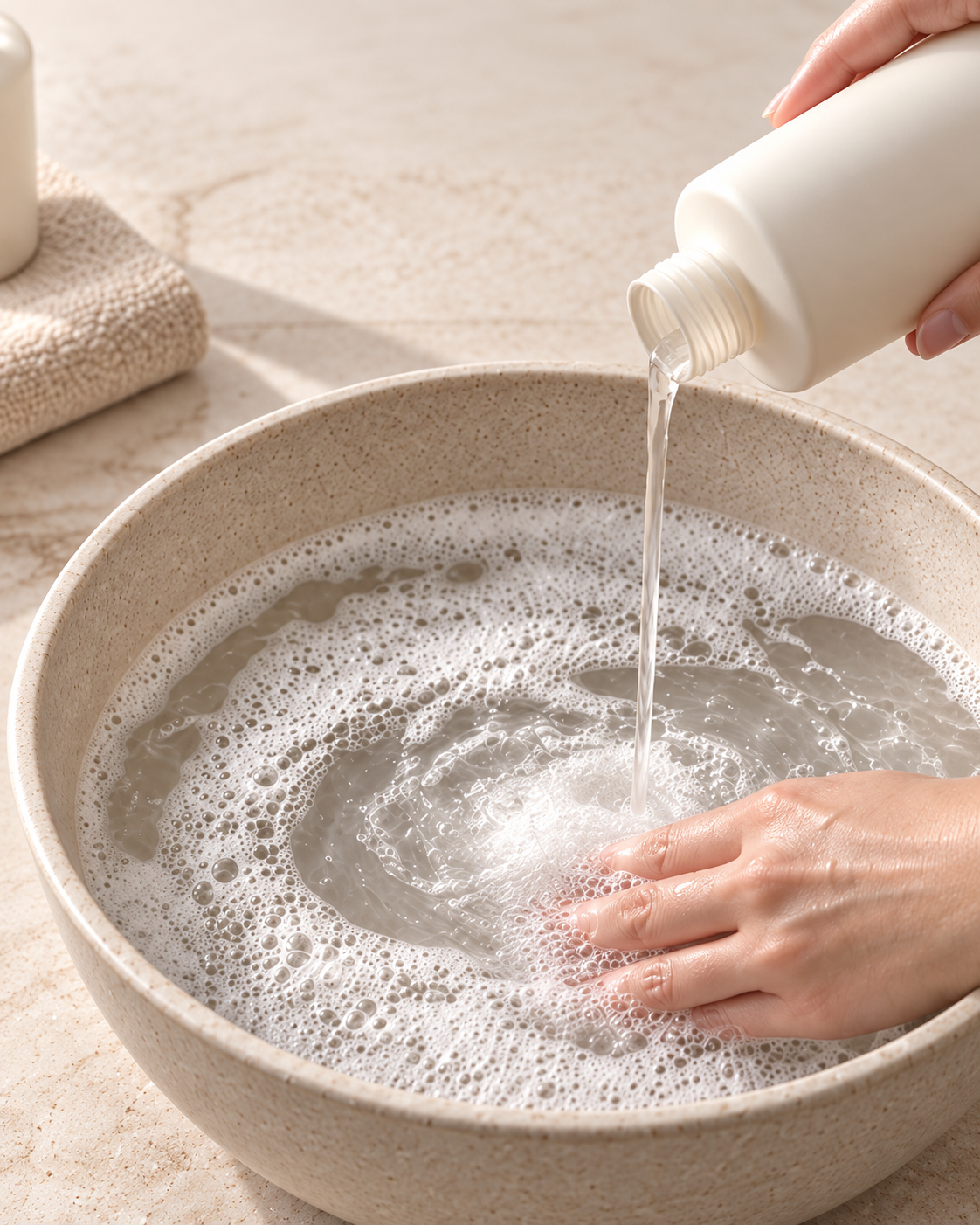
Dilute a Gentle Sulphate-Free Shampoo
Once the hair is fully wet, prepare the shampoo water separately.
Add a small amount of gentle sulphate-free shampoo to a clean basin of lukewarm water and mix until evenly dispersed.
Do not pour concentrated shampoo directly onto the hair, roots or base.
Because wigs and toppers do not receive natural scalp oils in the same way as growing hair, gentle cleansing is especially important. A mild shampoo can remove oil, perspiration and product build-up without unnecessarily stripping moisture.
04
Wash the Hair in One Direction
Lower the wet wig or topper into the diluted shampoo water while keeping the hair flowing in one direction.
Move it gently through the water, lift it out, and smooth the hair downwards with your hands. Repeat only as needed.
Avoid rubbing sections together, scrubbing in circles, twisting the hair or gathering it into a tangled bundle.
The diluted shampoo and movement of the water should do most of the cleansing work.
05
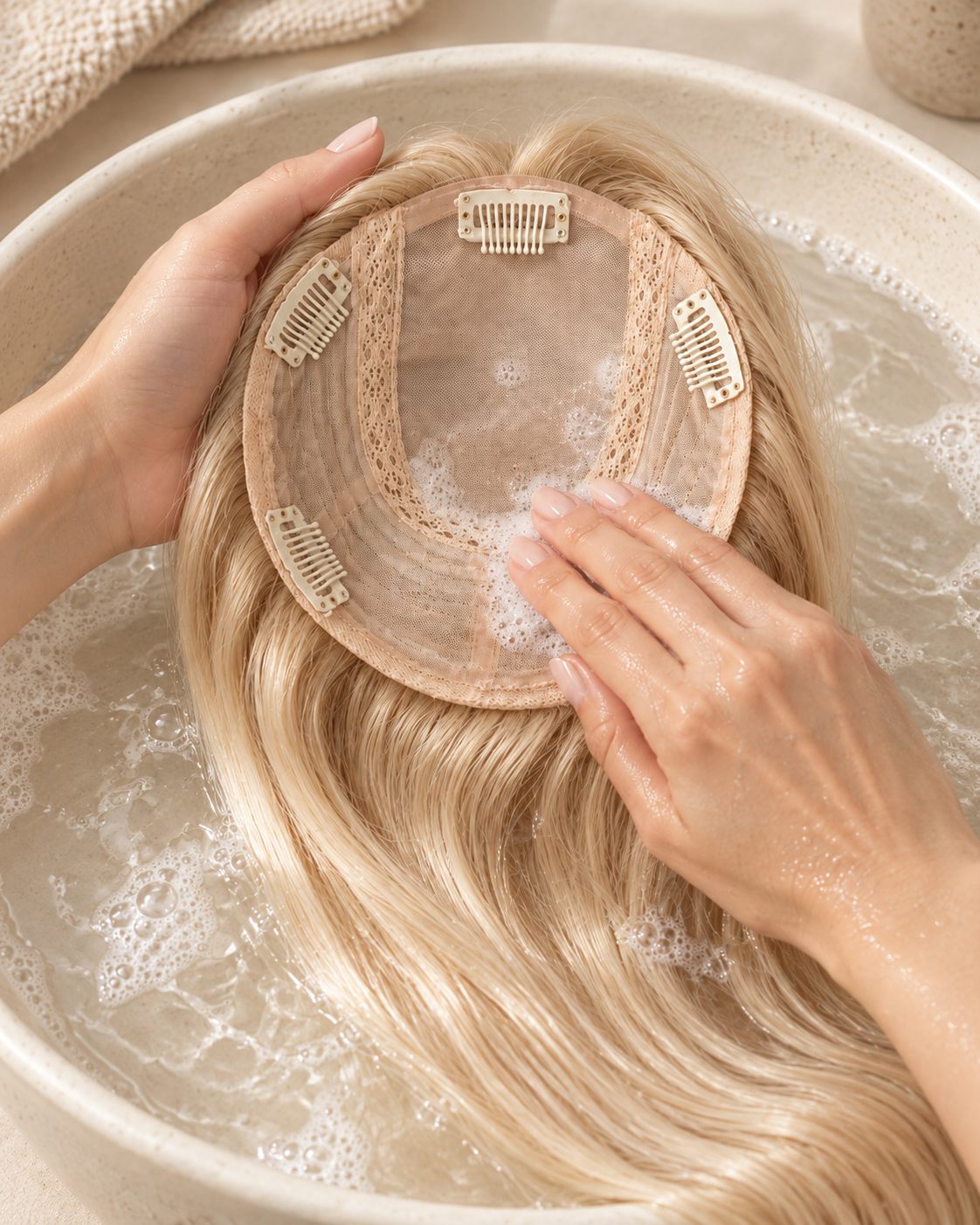
Clean the Inside of the Base
Turn the wig or topper over while supporting the base.
Using the pads of your fingertips, gently press and lightly massage the inside surface, especially where it sits closest to the scalp.
Do not scratch with your fingernails or scrub with a brush. Avoid pulling against knots, lace, clips, silicone areas or hand-tied sections.
Different wigs and toppers use different base constructions, so delicate materials should always be handled conservatively.
06
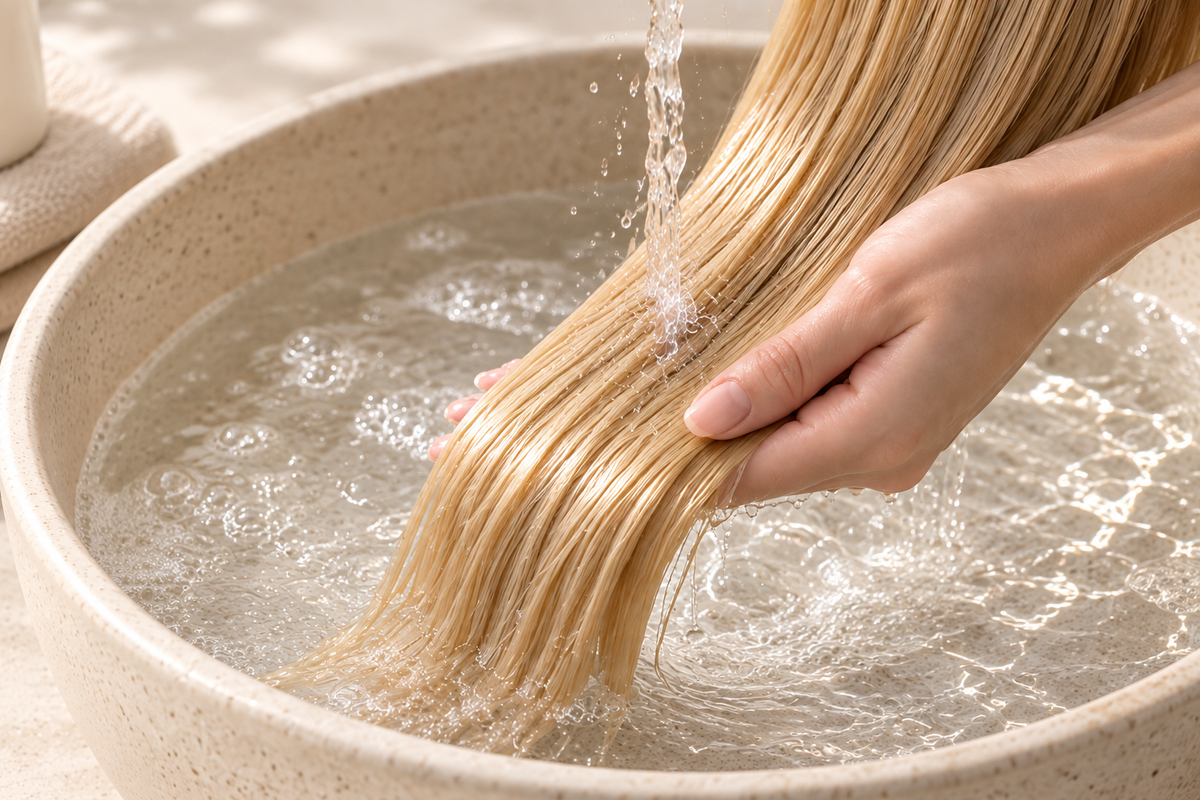
Rinse Thoroughly
Rinse the wig or topper with clean lukewarm water, either in a fresh basin or under gently running water.
Keep the hair aligned and allow the water to travel down the lengths until no visible foam or shampoo residue remains.
Avoid strong water pressure directly against delicate base materials.
A thorough rinse helps prevent residue from leaving the hair feeling coated or difficult to manage.
07
Condition the Mid-Lengths and Ends
Prepare a shallower basin of lukewarm water — approximately half the amount used during the shampoo stage is usually enough, provided the hair can still move freely.
Add a small amount of lightweight conditioner and disperse it through the water before introducing the hair.
Gently lower and lift the wig or topper through the conditioning water, smoothing the hair downwards. Focus mainly on the mid-lengths and ends.
Avoid applying concentrated conditioner directly onto the base, knots, lace, mono, silk-top areas, silicone or clips, where excess product may create build-up.
Allow the conditioner to work according to its instructions, then rinse thoroughly with clean lukewarm water.
Do not use fabric softener as a substitute for hair conditioner.
08
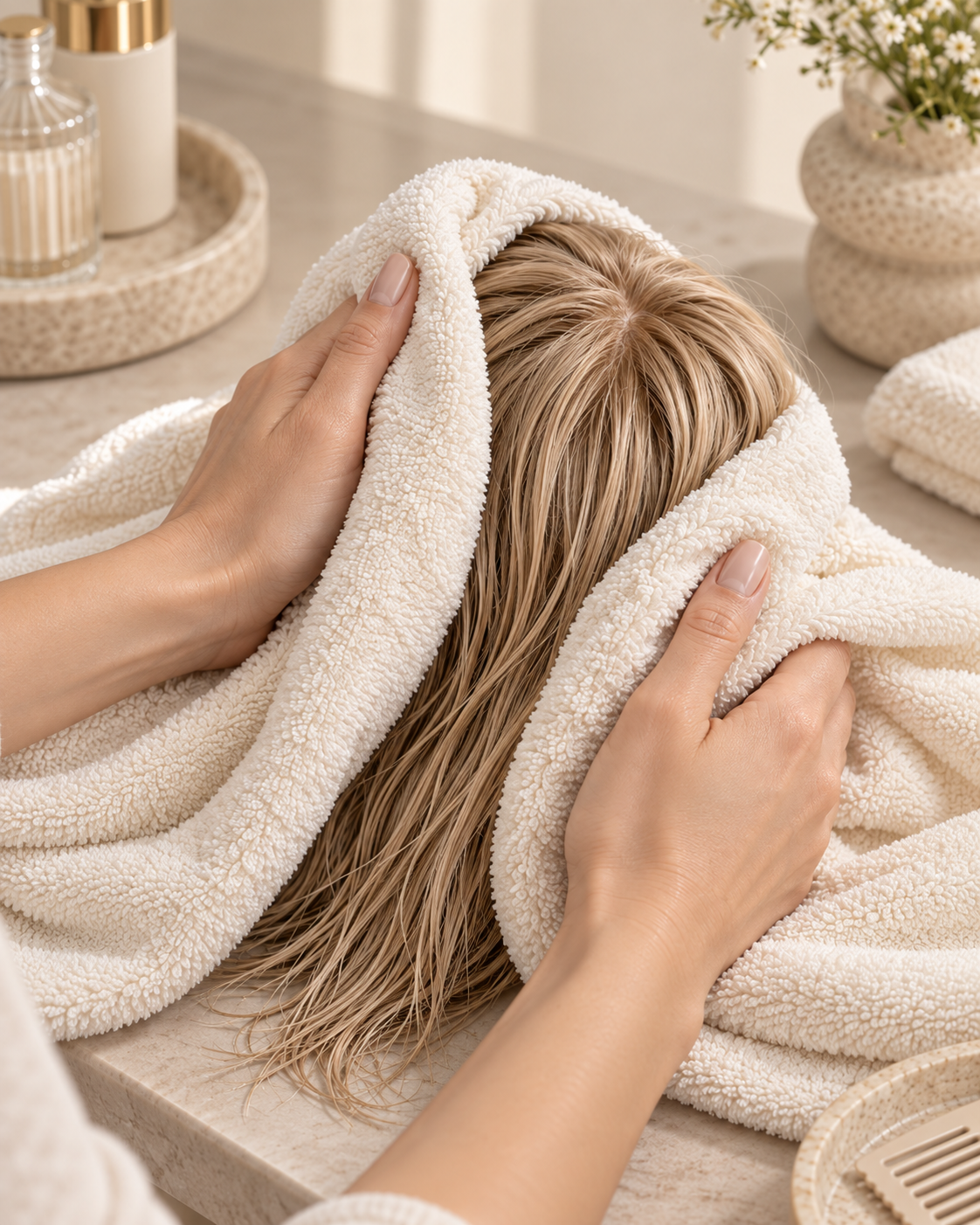
Press Out Excess Water
After rinsing, gently smooth excess water down the hair with your hands.
Do not twist or wring the wig or topper.
Place the hair inside a clean hair-drying wrap or on a soft absorbent towel, then press and lightly squeeze to remove excess moisture.
Avoid rubbing the hair back and forth, which can encourage tangling, frizz and mechanical wear.
09
Reshape and Air-Dry
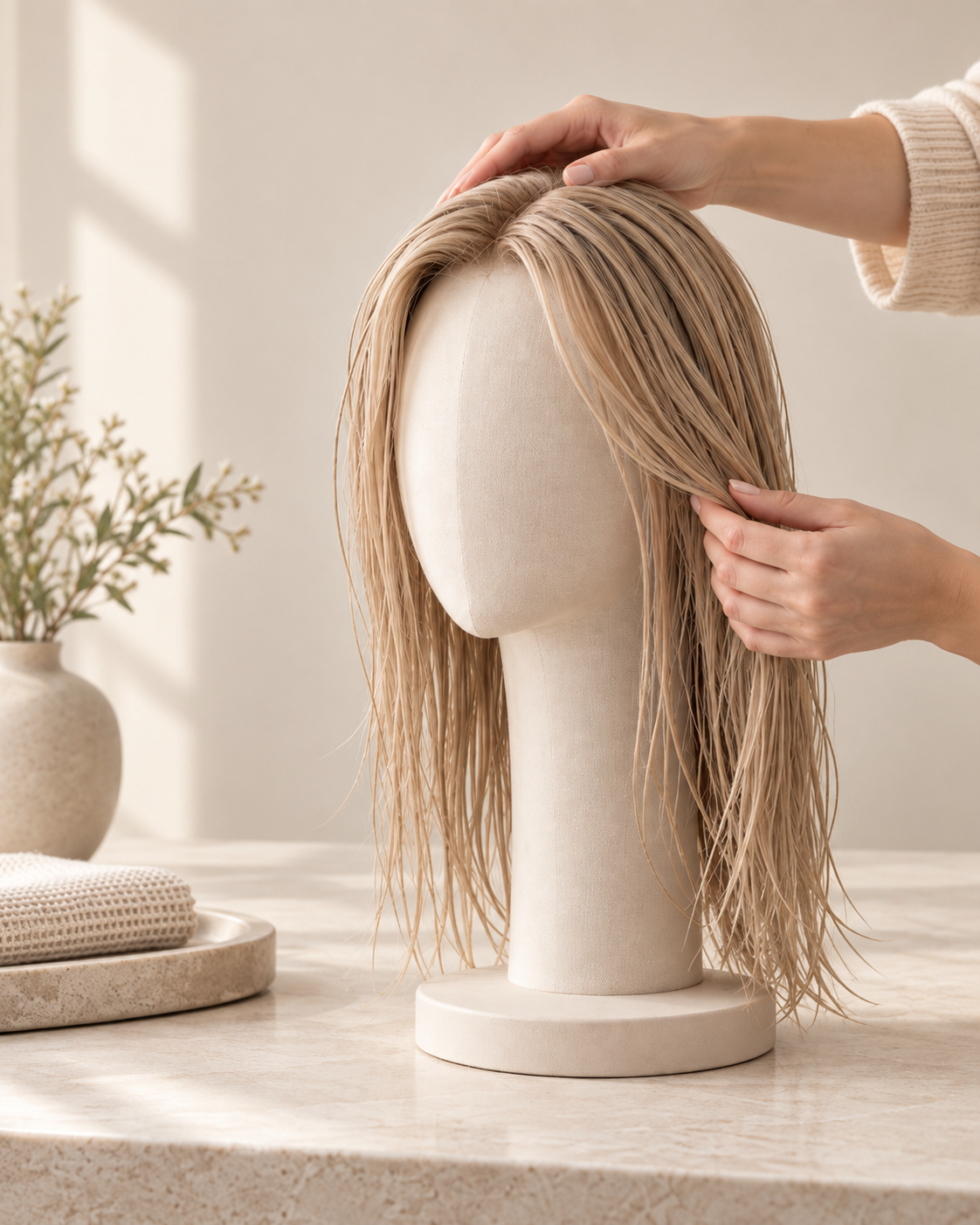
Place the damp wig or topper on a stable, appropriately sized stand or mannequin head.
Using a wide-tooth comb, begin at the ends and work gradually towards the roots while supporting the hair close to the base.
Restore the natural direction, parting and shape with as little handling as necessary.
Allow the piece to dry completely in a shaded, well-ventilated area. Avoid heaters and prolonged direct sunlight.
Drying time will vary depending on the length, density, construction and surrounding conditions.
How Often Should You Wash a Human Hair Wig or Topper?
Human hair wigs and toppers do not need to be washed after every wear.
Wash when you notice signs that cleansing is actually needed, such as:
- Oil or perspiration build-up
- Odour
- Styling-product residue
- Reduced natural movement
- Hair becoming more difficult to style
- A base that no longer feels fresh
How often this happens depends on wear frequency, climate, perspiration, styling products and how closely the base sits against the scalp.
The condition of the hair and base is a better guide than a rigid schedule. Unnecessary washing also means unnecessary handling.
KROWN-Z CARE NOTE
Heat Styling After Washing
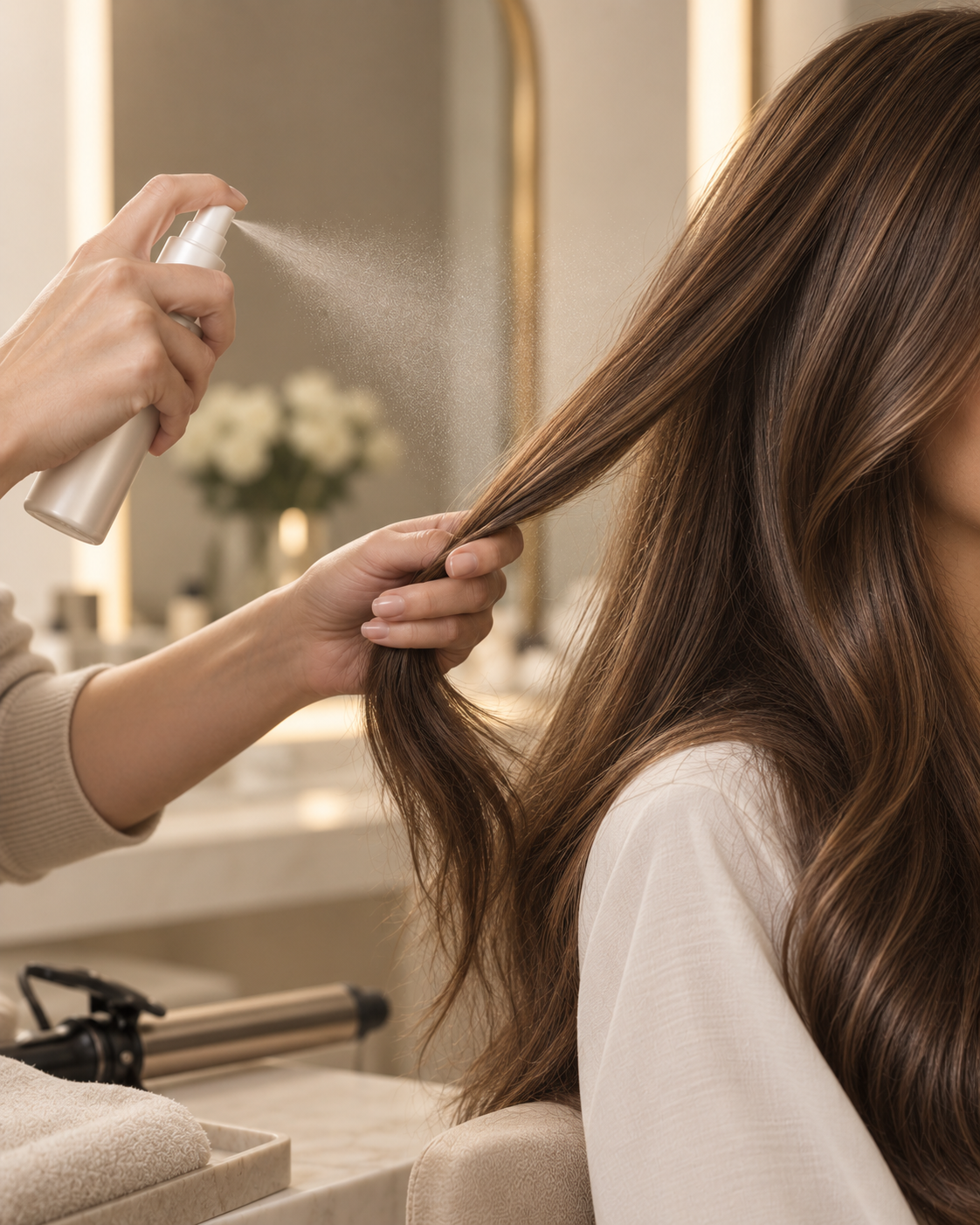
Only use heated styling tools once the hair is completely dry.
Before using a curling iron, straightener or other heated tool, apply a suitable heat-protective product and follow its application instructions.
Begin with a lower temperature and work in small sections.
Higher heat does not necessarily create a better result and may expose the hair to unnecessary thermal stress.
Never use a curling iron or straightener on damp hair.
WHAT TO AVOID
- Washing before detangling
- Leaving clips open during washing
- Applying shampoo before the hair is fully wet
- Using excessively cold or hot water
- Applying concentrated shampoo directly to the hair or base
- Rubbing wet hair together
- Scrubbing in circular motions
- Twisting or wringing the hair
- Scratching the base with fingernails
- Applying heavy conditioner directly onto knots or delicate base materials
- Rubbing wet hair aggressively with a towel
- Heat styling before the hair is completely dry
- Using heated tools without heat protection
Frequently Asked Questions
Can I wash a human hair wig and a human hair topper in the same way?
The basic principles are the same: detangle first, use lukewarm water, minimise friction, condition the lengths and dry carefully.
The main differences come from construction. Clips, lace, silicone, hand-tied areas and other base materials may require additional care.
Can I use regular shampoo on a human hair wig or topper?
A gentle sulphate-free shampoo is generally preferred.
Strong clarifying or deep-cleansing formulas may leave human hair unnecessarily dry, particularly when used frequently or on lightened and colour-treated hair.
Can I blow-dry a human hair wig or topper?
Air-drying is the gentlest option.
If your piece allows blow-drying, apply heat protection and use low heat with gentle airflow. Avoid concentrating high heat directly onto delicate lace, knots or base materials.
Can I use fabric softener?
KROWN-Z does not recommend it.
Fabric softener is designed for textiles rather than human hair and may leave residue on the hair or base. Use a lightweight hair conditioner instead.
Should conditioner be applied directly to the base?
Usually not.
Concentrate conditioner on the mid-lengths and ends. Heavy product around knots, lace, mono, silk-top areas or attachment points may create build-up.
Care That Protects More Than the Hair
Good care is not only about keeping the hair soft. A gentle routine also helps preserve natural movement, the appearance of the parting, the shape of the piece and the construction underneath it.
Reducing unnecessary friction, excessive heat and product build-up can help preserve the look and feel of a human hair wig or topper for longer.
DISCOVER
KROWN-Z HUMAN HAIR
Human Hair Wigs
Natural-looking full coverage with thoughtfully designed construction.
Human Hair Toppers
Targeted coverage and soft volume for the part, crown and top of the head.
Not sure which option is right for you?
Ask KROWN-Z →CONTINUE READING